If you live with regular headaches or migraines, you have probably tried plenty of things already. Painkillers, dark rooms, more water, less caffeine, earlier nights. Somewhere along the way someone may have mentioned reflexology, and now you are wondering whether there is anything in it.
The honest answer: reflexology cannot cure headaches or migraines, and it is not a substitute for medical care. What it may offer is an hour of deep relaxation, which matters because stress and poor sleep are common headache triggers. Some people find that helpful. The research evidence is limited and mixed, so I keep my claims modest.
That might seem like an odd way for a reflexologist to open a blog post. But I would rather you knew exactly where I stand before you read any further, and certainly before you spend any money with me. With that said, there are some sensible reasons why people with busy heads keep booking sessions, so let me walk you through them.
Why I Won't Promise You a Cure
Reflexology is a complementary therapy. The word complementary matters, because it means the therapy sits alongside proper medical care rather than in place of it. If headaches or migraines are a regular feature of your life, your first conversation should be with your GP or pharmacist, not with me.
Nothing I do on your feet changes what is happening inside your head. What I can offer is a protected hour where your body is encouraged to switch off properly, and for some people that turns out to be more useful than they expected. I will explain why a little further down.
What Is the Difference Between a Tension Headache and a Migraine?
Most everyday headaches are tension-type headaches. They tend to feel like a dull, tight band of pressure around the head, often creeping up from the neck and shoulders, and the NHS has a clear overview of tension headaches if you want to read more. They are unpleasant, but they usually ease with rest, water and ordinary painkillers.
Migraines are a different thing altogether. A migraine is a neurological condition, often bringing throbbing pain on one side of the head, and sometimes nausea, sensitivity to light and sound, or changes to your vision. The NHS migraine pages explain the different types and treatments, and The Migraine Trust is an excellent charity to know about if migraines are part of your life.
I am not qualified to diagnose either one, and I never try to. What I can tell you is what I see in my own work, which is people whose headaches seem tangled up with stress, tight shoulders and broken sleep.
So What Might Reflexology Actually Offer?
Deep relaxation, mainly. Stress and disrupted sleep are among the most commonly reported headache triggers, and an hour where you genuinely switch off can help some people manage those triggers a little better. It will not stop a migraine, but it may make the weeks in between feel calmer. I have written before about reflexology for stress and anxiety and about whether reflexology can help you sleep better, and there is a great deal of overlap with what my headache-prone clients describe.
There is also something in the rhythm of it. A regular session builds a pause into a busy week, a fixed point where nobody needs anything from you and your phone is in another room. Clients often tell me they feel generally less tense after a few sessions, and that they start noticing their jaw and shoulders earlier in the day, which is where a lot of head and neck tension quietly builds.
I want to be careful with the research here. Some small studies suggest reflexology may support relaxation and ease feelings of tension, though the evidence is mixed and the studies tend to be small. Nobody credible claims that reflexology treats migraine, and I am certainly not claiming it either.
None of this is dramatic, and I would be wary of anyone who tells you otherwise. It is a quiet, steady sort of support. For some of my clients, that is exactly what a week of screens, deadlines and school runs has been missing.
Which Parts of the Feet Does a Reflexologist Work?
In reflexology, the feet are treated as a map of the whole body. If that idea is new to you, my post on what reflexology actually is covers the basics without any mystique.
When someone comes to me with head and neck tension, I spend a long time on the toes. The head and brain reflex areas sit on the big toes and across the smaller toes, and the neck reflexes run along the bases of the toes. I also give proper attention to the shoulder and spine reflexes, because tension rarely stays neatly in one place.
I describe this so you know what a session involves, not as a promise about outcomes. Working a reflex area is not a treatment for the part of the body it maps to. It is simply where I focus my attention when head and neck tension is what brought you to me.
What Does a Session Actually Look Like?
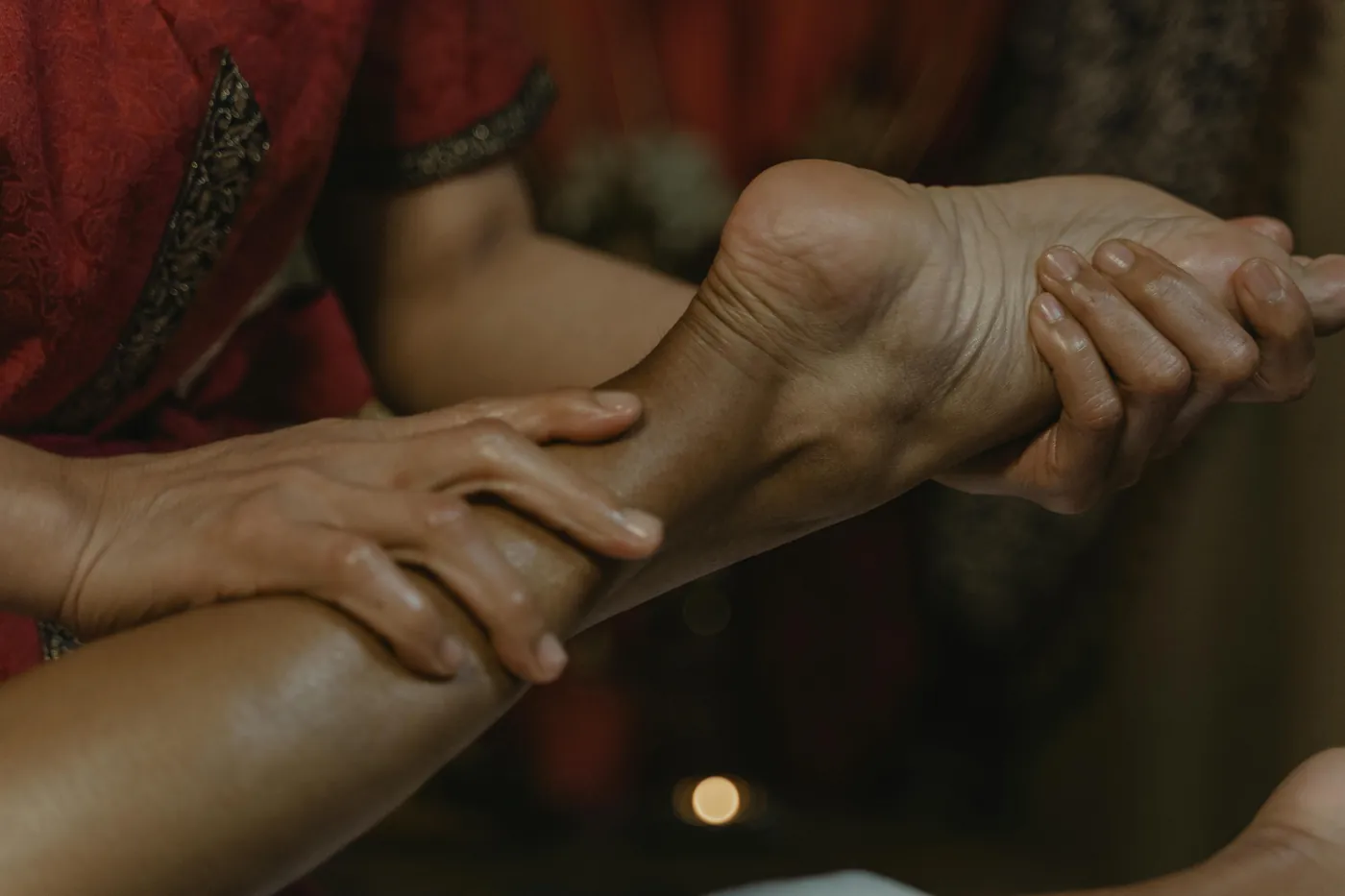
We start with a short conversation about your health, your headaches and anything else that is going on, so I can work safely and sensibly. Then you settle back somewhere comfortable, usually your own sofa or a reclining chair, and I work on your feet for the rest of the hour.
The pace is slow and steady. Most people go very quiet somewhere in the first twenty minutes, and a fair few doze off completely. There is nothing you need to do and nowhere you need to be. That is rather the point.
Afterwards, I would suggest a glass of water and a quiet evening if you can manage one. Some people feel sleepy for an hour or so, while others feel clear-headed straight away. Either way there is no rush to get up, and I pack away around you rather than expecting you to move.
Why Does Being Treated at Home Help?
If you have ever had a migraine, you will know that bright lights, noise and travel are the last things you want. This is one of the reasons I work as a mobile reflexologist rather than from a clinic.
There is no waiting room, no harsh lighting and no drive home afterwards with the sun in your eyes. Your session happens in your own quiet space, with the curtains drawn if that suits you better, and when it finishes you are already on your own sofa. For anyone with a sensitive head, that counts for more than people expect.
One note on timing. If you are in the middle of a migraine attack, a treatment is usually the last thing you want, and I would never suggest booking for that moment. Most clients use reflexology between episodes, as part of a calmer weekly or monthly routine.
When Should You See a GP?
Please do not let reflexology, or any complementary therapy, delay a medical conversation. If your headaches are new, changing, becoming more frequent or worrying you in any way, speak to your GP first.
Some headache symptoms need urgent attention. Rather than listing them all here and risking leaving something out, I would point you to the NHS migraine guidance, which sets out clearly when to seek help. If you are ever in doubt, get checked. Reflexology will still be here afterwards.
What Are Realistic Expectations for a Short Course?
If you decide to give reflexology a try, I would suggest thinking in terms of a short course rather than a one-off. A single appointment tells you whether you enjoy it and whether your body settles into it. A course of three, spaced a few weeks apart, gives you a fairer picture of whether that regular pause is doing anything useful for your general tension levels.
Keep a simple note of how you feel in the days after each session. Nothing scientific, just an honest record. If you notice no difference at all after three sessions, that is useful information too, and I would rather you knew than kept spending money out of politeness.
A full session is £45 for 60 minutes, and a course of three is £120, which saves £15. If you would like to try it without committing to a full hour, there is a 30 minute express session at £30. All the details are on my services page, or you can call me on 07980 112 120 if you would rather talk it through first.
If your headaches feel tangled up with a busy mind or broken nights, you might also like my posts on reflexology for stress and anxiety and reflexology and sleep. They cover a lot of the same ground from a different angle.