I'll be honest with you. When I first started seeing clients, I expected people to come to me with sore feet, bad backs, that kind of thing. Physical complaints. And some do. But the overwhelming majority of people who book a reflexology session with me are coming for one reason: they're stressed out of their minds.
Teachers. Parents. People going through difficult times at work. Carers who spend all day looking after everyone else. People who haven't stopped in months and can feel it catching up with them. They don't always use the word "stress." Sometimes they say they're exhausted, or they can't switch off, or they feel like they're running on empty. But when I start working on their feet, their body tells me the same story every time. Tension. Everywhere.
What Stress Does to Your Body
You probably already know this, but it's worth saying: stress isn't just a feeling. It's a physical state. When you're stressed, your body produces cortisol and adrenaline. Your muscles tighten. Your breathing gets shallow. Your digestion slows down. Your sleep suffers. Over time, all of that takes a real toll.
The problem is that modern life doesn't give us many opportunities to switch off that stress response. We go from work stress to traffic stress to household stress to scrolling-through-the-news stress. The body never gets the signal that it's safe to relax. It stays in that heightened state, and after a while, it starts to feel normal. You forget what calm actually feels like.
What Happens During a Reflexology Session (From a Stress Perspective)
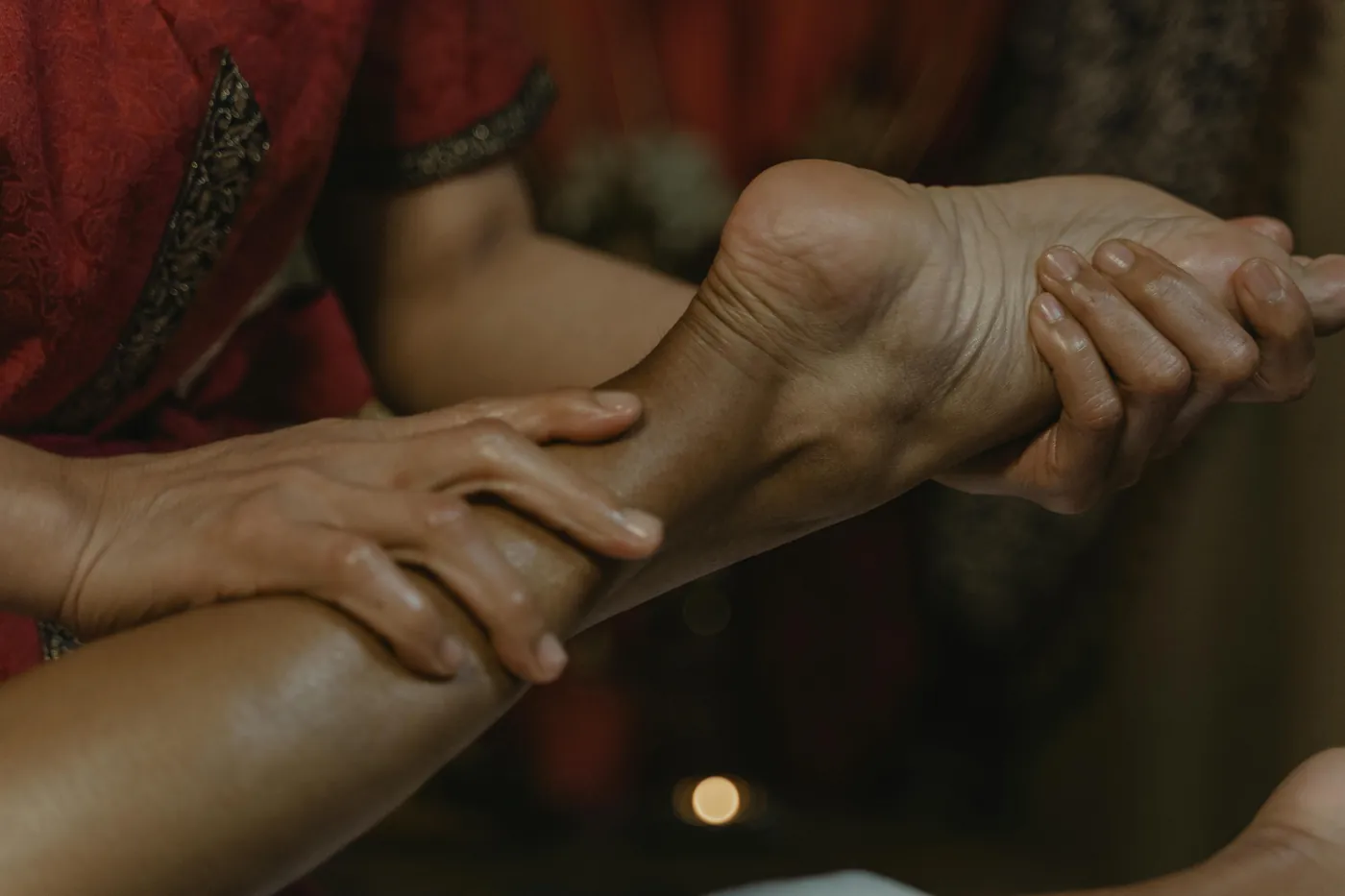
When I work on someone's feet, something shifts. I've watched it happen dozens of times now and it still fascinates me.
In the first ten minutes or so, most people are still holding on. Their feet might twitch. Their breathing is up in their chest. They're thinking about whether they locked the car or what they need to cook for dinner. That's completely normal.
Then, somewhere around the fifteen or twenty minute mark, there's a change. Their breathing slows and deepens. Their feet warm up (cold feet are surprisingly common in stressed people). Their body softens. Sometimes their stomach starts gurgling, which sounds embarrassing but is actually a brilliant sign. It means the parasympathetic nervous system is kicking in. That's the "rest and digest" part, the opposite of the fight-or-flight response.
By the end of a session, most of my clients are in a completely different state to when they arrived. Some have drifted off to sleep. Others are awake but have that dreamy, heavy-limbed feeling you get after a really good rest. (I've written a full walkthrough of what happens during your first session if you're curious.) One client described it as "like someone turned the volume down on everything." I thought that was a perfect way to put it.
The Reflex Points I Focus on for Stress and Anxiety
There are specific areas on the feet that relate to the parts of the body most affected by stress. I tend to spend extra time on these during sessions where stress is the main concern:
The solar plexus point, which sits in the soft area just below the ball of the foot. This is the big one for anxiety. It relates to the diaphragm and the core of the body where a lot of people hold nervous tension. When I press this point during a treatment, people often take a deep, involuntary breath. You can almost see the tension leaving.
The head and brain points in the big toes. If someone tells me they can't stop their mind racing, I know I'll find a lot going on in the toes. Working these areas seems to help people's thoughts settle.
The adrenal gland point, which sits in the middle of the foot. The adrenal glands produce cortisol, so this is the point I work when someone's been running on adrenaline for too long.
The spine reflex along the inside edge of the foot. Tension in the spine and shoulders is one of the most common physical symptoms of stress. This whole line often needs a lot of attention.
I want to be clear: I'm not claiming to treat anxiety as a medical condition. If someone is experiencing serious anxiety or mental health difficulties, they should speak to their GP or reach out to Mind. Reflexology works alongside conventional care, never instead of it.
What My Clients Tell Me
I don't want to overstate things here. I'm one reflexologist working with a relatively small number of clients in West Sussex. I can only share what people report to me, and everyone's experience is different.
That said, these are the things I hear regularly:
"I slept through the night for the first time in ages." This comes up after almost every session. Something about the deep relaxation seems to help people sleep properly again, at least for a night or two. Clients who come regularly often say their sleep has improved more permanently. I've written more about reflexology and sleep if that's something you're struggling with.
"I felt calm for days afterwards." Not just the evening of the treatment, but into the following days. Several clients have told me they notice a difference in how they react to things. Less snappy. More patient. More able to let things go.
"I didn't realise how tense I was until I wasn't." This is a common one. People come in thinking they're "fine, just a bit tired" and then after a session realise they'd been carrying enormous tension without being aware of it. It's only when it lifts that they feel the contrast.
How Often Should You Have Reflexology for Stress?
If you're going through a particularly stressful period, I'd suggest starting with weekly sessions for three or four weeks. That gives the body a chance to properly unwind and reset, rather than having one session and then going straight back into the pressure. I offer a course of 3 or 5 sessions at a reduced rate for exactly this reason.
After that initial course, monthly sessions work well for keeping on top of things. Regular reflexology helps the body stay in a calmer state rather than constantly winding back up between sessions.
Some of my clients in Horsham, Dorking, and the surrounding villages have been coming monthly for a while now. They see it as part of how they look after themselves, alongside eating well and getting outside. I think that's a healthy way to think about it.
Why Having Treatment at Home Makes a Difference for Stress
I chose to work as a mobile reflexologist partly for this reason. If you're already stressed, the last thing you need is another appointment to rush to. Driving to a clinic, finding somewhere to park, sitting under fluorescent lights in a waiting room. None of that helps your nervous system calm down.
When I come to your home, you're already in your safe space. You can dim the lights, put the kettle on, get comfortable. After the session, there's nowhere you need to be. You can wrap yourself in a blanket and just sit with how you feel. That matters. The after-treatment period is part of the healing, and it's so much better when you don't have to put your shoes on and get in the car.
If you've been running on empty and you're wondering whether reflexology might help, I'd say try one session and see how you feel. You'll know within that first hour whether this is something your body has been asking for.
If stress shows up for you as tension headaches, I've written more about reflexology for headaches and migraines. And if you're wondering about frequency beyond a stressful patch, here's my guide to how often to have reflexology.