The Sleep Problem Nobody Talks About
When I ask my clients what they're hoping reflexology might help with, sleep comes up again and again. But it's not always what you might think. Most of the people who mention sleep to me aren't the ones who can't fall asleep at all. They're not the clinical insomniacs dealing with months of complete wakefulness. They're people with a different problem entirely, and it's one I think most of us just accept as normal.
They're the people who can fall asleep fine but wake at 3am and lie there for two hours, their minds suddenly wide awake and busy. Or the ones who sleep right through but wake up feeling like they haven't slept at all, as if their body didn't actually rest. Or the people who can feel their mind still running even as they're trying to switch off for the night, stuck in that frustrating loop where the harder you try to sleep, the more awake you become.
This is incredibly common, and most people just put up with it. They blame work, or stress, or aging, or the state of the world, and they carry on. If you're one of these people, you're not alone. The NHS has some good practical advice for improving sleep, and it's worth reading if you're struggling. But I mention it because almost everyone I see with one of these sleep patterns also mentions it getting better after their first session with me.
What I See in My Practice
Sleep improvement is the single most reported benefit from my clients. I keep an informal record of what people tell me, and it comes up far more often than anything else. Someone will come in saying they want to work on stress, and a week later they'll text me saying "by the way, I slept through the entire night for the first time in months." Another person books for tension and sends me a message the morning after saying they had the best sleep they could remember.
Can I promise this will happen for you? No, I can't. Everyone's body is different. But it happens often enough, with enough consistency, that I think there's something real going on. I've noticed patterns too. People who carry a lot of tension in their feet often have the most disrupted sleep. Cold feet are surprisingly common among my restless sleepers. And when I work through their reflex points, I regularly find areas of tightness in the head and brain areas, and real sensitivity in the solar plexus point where anxiety lives. These are the people who usually text me afterwards to say they slept differently.
What strikes me most is how quickly it can happen. This isn't a slow build. Many of my sleep clients fall asleep during the session itself, and then they sleep properly that night. It's as if their body was just waiting for permission to switch off.
How Reflexology Might Help with Sleep
The simple explanation is that reflexology helps your body shift out of a stressed state into a calm one. When you're stressed, your body stays in a heightened state. Your nervous system is on alert. Even when you're lying in bed trying to sleep, you're still operating from that place of readiness. Reflexology seems to flip a switch. It tells your nervous system it's okay to stand down.
The more specific explanation involves the reflex points I work with. When sleep is someone's main concern, I focus on particular areas. The brain and head points are in the big toes. The pineal gland point, which relates to melatonin production, is also in that area. The solar plexus point, which is connected to anxiety, gets extra attention. And the spine reflex, which runs along the inner edge of the foot, helps release physical tension that keeps people awake. When you're working with a client for sleep, you work these areas with extra focus and usually more slowly, with deeper pressure to really encourage relaxation.
The science is still developing, but published research has looked at reflexology for sleep quality with encouraging results. That said, I'm honest about what I don't know. I can't explain exactly why working these points helps so many people sleep better. I just know that it does, and that's enough for me to keep offering it and to keep seeing people benefit from it.
A Typical "Sleep Session"
When someone books specifically because they're struggling to sleep, we start with a proper conversation. I ask them about their sleep patterns. What time do they wake up? How long does it take them to fall asleep? Do they feel rested when they wake? What have they already tried? This gives me a picture of what's happening and where to focus my work.
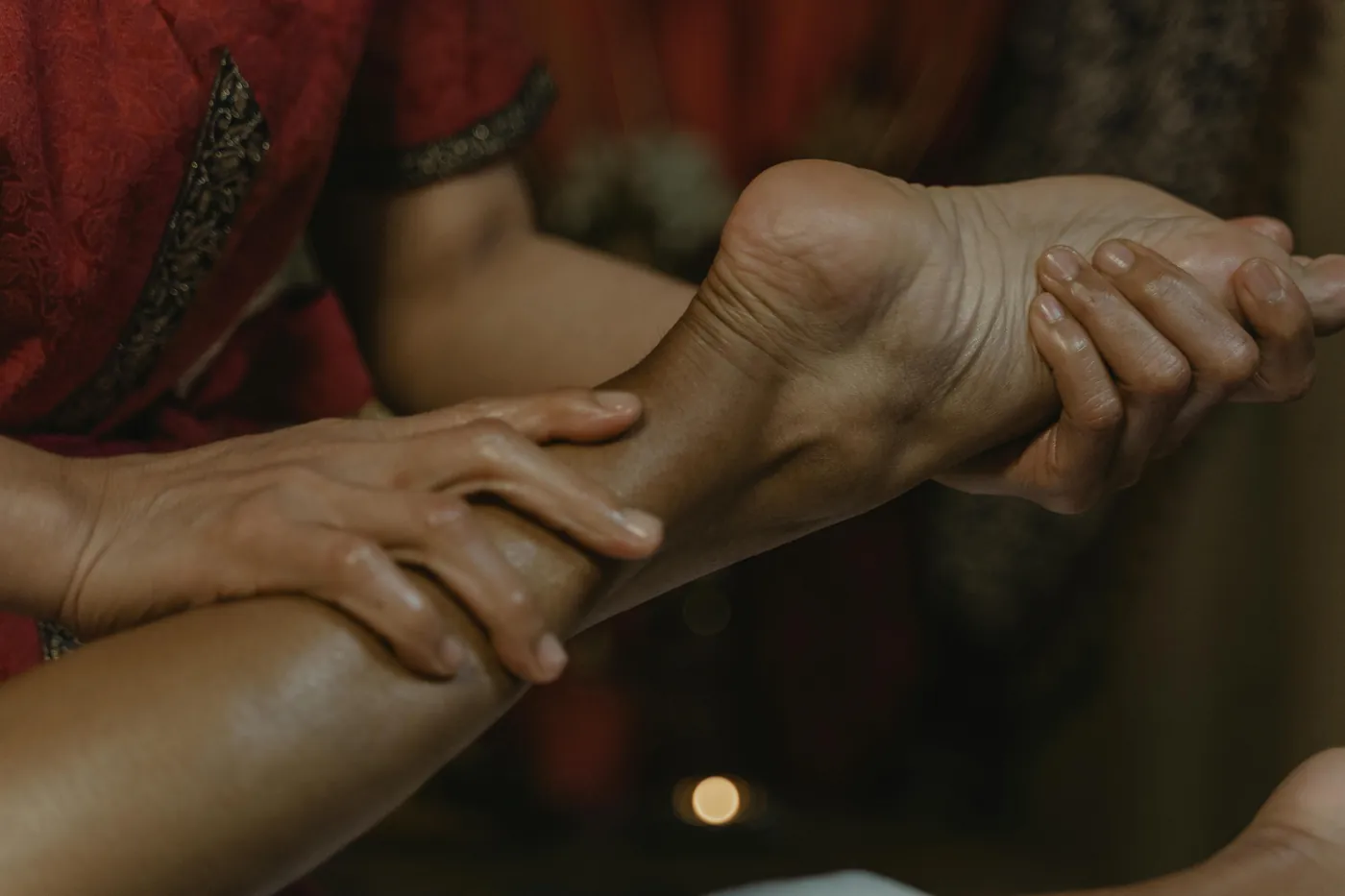
Then I do a full treatment, but with a specific emphasis on the head, brain, and nervous system reflex points. The whole approach is gentler and slower than it might be for someone working on something else. The goal isn't stimulation, it's maximum calm. I work slowly, with deep pressure but never painful pressure, and I often find myself working the same areas repeatedly, just encouraging them to release. Many clients fall asleep during the session. Some drift in and out. Afterwards, they go straight to bed or lie on the sofa, and they sleep.
This is where mobile reflexology really makes a difference. I come to you, so you don't have to get up and drive home afterwards. You're already in your calm space. You can go straight to bed or stay on the sofa as long as you need to. The relaxation carries on naturally, rather than getting disrupted by traffic or a journey home. If you've been curious about what a first session is like, I've written about what to expect at your first appointment too.
What My Clients Say About Sleep After Reflexology
I don't usually include direct client quotes, but sleep is the one thing where people volunteer feedback so consistently that I think it's worth sharing what they report.
One client told me she hadn't slept through a whole night in six months. After her first session, she slept right through and woke feeling like herself again. She's been back monthly and it's held.
Another used to wake at 4am every single morning, and after her second session, it just stopped. She still occasionally wakes early, but it's not the rigid pattern it was.
A third said the actual hours of sleep didn't change much, but the quality did. She sleeps the same amount as she always has, but now she wakes up actually feeling rested instead of like she needs another hour in bed.
The effects tend to build with regular sessions. Someone might notice a real difference after their first appointment, then find it gets even better if they come back a month later. This is why I offer bundle pricing for multiple sessions, especially for people who are working on something specific like sleep. Regular reflexology seems to be more effective than one-off treatments.
Tips for Better Sleep Alongside Reflexology
Reflexology works better when you support it with the basics. Cut screen time before bed if you can. Keep your bedroom cool. Don't eat heavy meals late in the evening. These things matter. I sometimes suggest an evening appointment so you can go straight to bed afterwards, without the evening stretching out in front of you.
I won't pretend that these tips alone will fix sleep problems. But they make a real difference, especially when they're combined with reflexology. Your body wants to sleep. Sometimes it just needs a bit of support from both directions to actually do it.
Is Reflexology Right for Your Sleep Issues?
I'm going to be honest here, because I think it matters. If you have a diagnosed medical sleep condition like sleep apnoea or narcolepsy, you need to see your GP first. Reflexology isn't a replacement for medical care. But it can work alongside it, supporting your body as you deal with whatever's causing the problem.
For the vast majority of people whose sleep is disrupted by stress, anxiety, overthinking, or physical tension, reflexology is absolutely worth trying. One session is enough to know whether your body responds well to it. Many people know straight away. If you've been lying awake at 3am for months, or waking up feeling like you haven't actually rested, there's a decent chance that reflexology could make a real difference for you.
If you're ready to try reflexology for sleep, have a look at available sessions and prices. You might also find it helpful to read about how reflexology helps with stress and anxiety, since the two often go together.
People often ask how regularly they should book when sleep is the goal. I've answered that properly in my guide to how often to have reflexology.