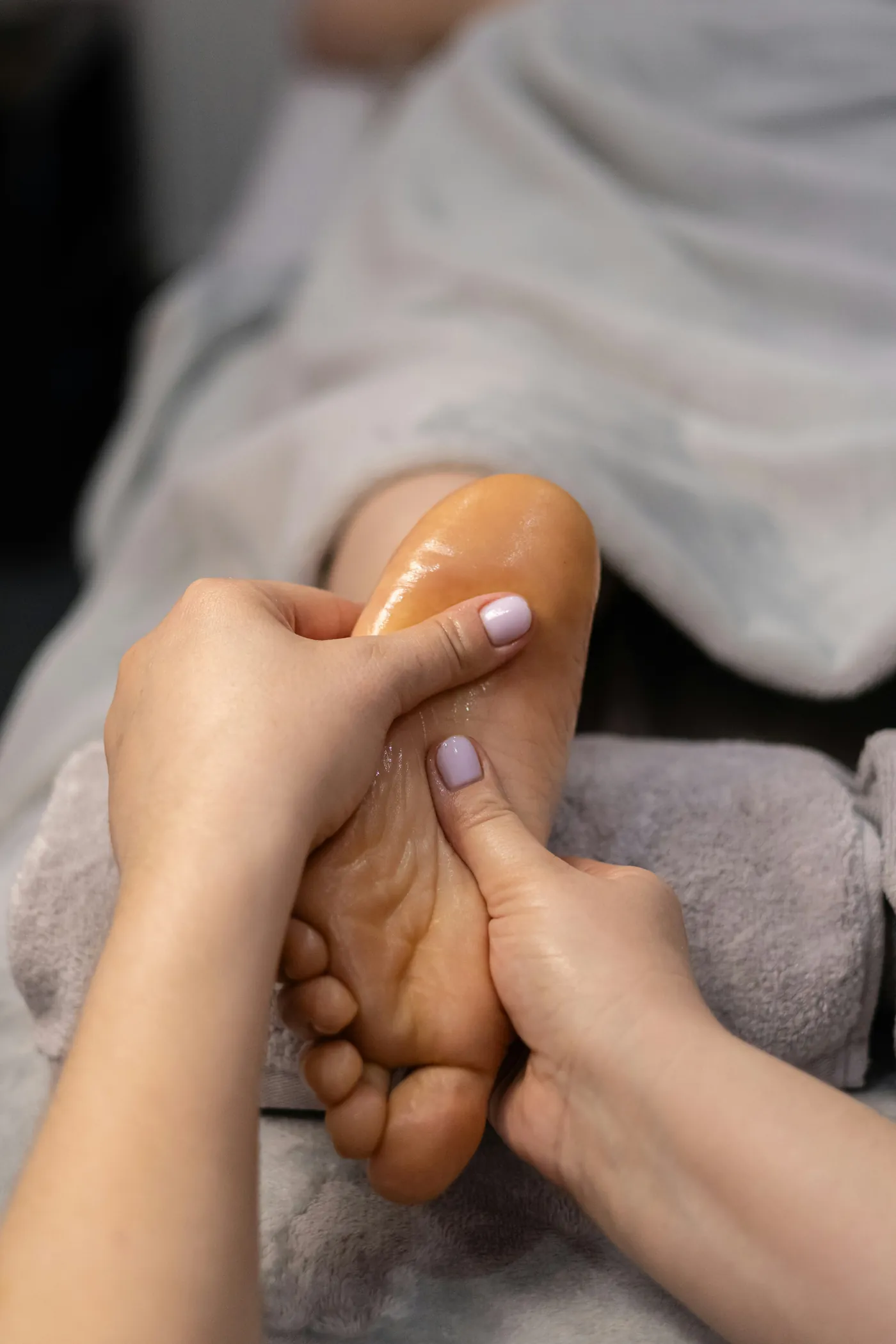
One of the questions I get asked most often is whether reflexology is safe. The short answer is yes. For the great majority of people it's a very gentle, low-risk therapy. But there are some situations, known as contraindications, where I'll ask you to speak to your GP or midwife before we book, or where I'll adapt or postpone your treatment. I'd much rather tell you about them plainly here than have you wonder.
Reflexology is not suitable, or needs adapting, for people with a suspected DVT or clotting disorder, in the first 12 weeks of pregnancy, with a fever or acute illness, foot injuries or contagious skin conditions, severe osteoporosis in the feet, recent surgery, or unstable heart conditions. If any of these apply, speak to your GP or midwife before booking.
Everything that follows is how I approach these situations in my own practice. It isn't medical advice, and it isn't a complete list of every possible circumstance. I'm a reflexologist, not a doctor, and when in doubt the right person to ask is always your GP.
What Is a Contraindication in Reflexology?
A contraindication is simply a reason to pause before going ahead with a treatment. A few are absolute, meaning I won't treat until the situation has changed or your doctor has confirmed it's fine. Most just mean I adapt what I do. I might avoid a particular area, use a lighter touch, or suggest we move your appointment back a couple of weeks.
If you're new to all this and wondering what a treatment actually involves, I've written a plain guide to what reflexology is and how it works. It's useful background for what follows, because once you know that reflexology is sustained, gentle pressure applied to the feet, most of the cautions below make obvious sense.
When Will I Ask You to Speak to Your GP First?
The most important situation is a suspected or diagnosed deep vein thrombosis, or DVT. This is a blood clot, usually in the leg, and the NHS has clear guidance on the symptoms. Because reflexology involves working the feet and lower legs, I won't treat anyone with a suspected clot, a recent DVT, or an unmanaged clotting disorder until their doctor has said it's safe. This is a standard position across the profession, and it isn't negotiable. If you have unexplained swelling, heat or pain in one calf, please contact your GP or call 111 before you think about booking anything with me.
I take a similar approach with unstable heart conditions. If you've recently had a heart attack, or your cardiologist is still adjusting your medication, I'll ask for the go-ahead from your medical team first. Once things have settled, reflexology is usually fine, and people with well-managed heart conditions come to me regularly.
Recent surgery is another one, though here it's almost always a postponement rather than a no. Your body puts a great deal of energy into healing after an operation, and the risk of clots is slightly higher in the weeks that follow. Depending on what the surgery was and how your recovery is going, I may suggest waiting a little while or checking with your consultant. When we do go ahead, I'll adapt the treatment around anything that's still tender.
Can You Have Reflexology While Pregnant?
Yes, and many pregnant women find it a lovely, calming way to take an hour for themselves. But my personal policy, which is common across the profession, is not to treat during the first 12 weeks of pregnancy. The early weeks are when pregnancies are naturally at their most delicate, and although there's no evidence that reflexology causes harm, I'd rather be cautious than give anyone a reason to worry.
From the second trimester onwards I'm happy to treat, and if there are any complications in your pregnancy I'll ask you to check with your midwife first. If you're pregnant and unsure about any therapy, the NHS page on keeping well in pregnancy is a sensible starting point, and your midwife is always the right first port of call.
What About Problems With the Feet Themselves?
Because reflexology is worked through the feet, anything affecting your feet matters. Fractures, sprains and recent injuries need time to heal before I put pressure anywhere near them. The same goes for open wounds and ulcers. I won't work over broken skin.
Contagious skin conditions such as athlete's foot or verrucas are a slightly different case. Often I can simply work around the affected area, or work on your hands instead, which is a perfectly good alternative that surprises people. If an infection is widespread, I may ask to reschedule until it has cleared up. Please don't be embarrassed about any of this. I see feet all day, and athlete's foot is one of the most ordinary things I come across.
Severe osteoporosis affecting the feet also calls for care. If your bones are fragile, firm pressure isn't appropriate, so depending on what you tell me I'll either use a much lighter touch throughout or ask you to check with your GP before we begin.
Should You Have Reflexology With a Fever?
No, and this one is straightforward. If you have a fever or you're feeling acutely unwell, your body is already busy fighting something, and an hour of treatment isn't what it needs. There's also the simple, practical matter that I travel from home to home, and I don't want to carry a bug to my next client.
If you wake up poorly on the day of your appointment, just let me know and we'll rearrange. I'd genuinely rather move a booking than have you push through and feel worse for it. The treatment will do far more for you on a day when your body can actually settle into it.
What If You Have Diabetes?
Diabetes doesn't rule out reflexology at all. Several of my regular clients have diabetes and do well with treatments. It does mean I take extra care with your feet, because diabetes can reduce sensation and slow healing, particularly if your circulation is affected.
In practice, that means a few more questions on your consultation form, appropriate pressure rather than deep work, and a habit of quietly keeping an eye out for anything on your feet that looks like it needs a doctor's attention. If you have diabetic neuropathy or any history of foot ulcers, I'll ask you to get the go-ahead from your GP or podiatrist before your first treatment.
Why Do I Ask Everyone to Fill In a Consultation Form?
All of this is exactly why I ask every new client to complete a short consultation form before their first treatment. It covers your medical history, any medication you take, and anything currently going on with your feet. It takes about five minutes, and it means I can adapt your treatment properly instead of guessing.
Nothing on the form is there to catch you out, and what you tell me stays confidential. In almost every case the answer is a small adaptation, not a cancelled appointment. If you'd like to know how a first appointment runs from start to finish, I've written about what to expect at your first reflexology session, consultation form included.
Working this way is also part of what the Association of Reflexologists expects of its members. I'm fully qualified, fully insured and a member of the AoR, and their standards shape how I practise, from the questions I ask to the situations where I'll tell you honestly that today isn't the right day.
So Is Reflexology Safe for Most People?
Yes. For the great majority of people, reflexology is a very safe and gentle therapy, and nothing on this list is meant to put you off. It's simply the honest picture. Being upfront about the handful of situations where caution matters is, to my mind, part of doing this job properly.
It's worth repeating what reflexology is and isn't. It's a complementary therapy that may support relaxation, sleep and general wellbeing. It doesn't treat, cure or prevent any medical condition, and it's never a substitute for seeing your GP. Clients often tell me they feel calmer and sleep more soundly after a session, and that kind of gentle support is what it does best.
If you're unsure whether anything here applies to you, just ask. You can call or message me on 07980 112 120 before booking, and I'll tell you honestly whether reflexology is a good idea right now or whether it would be better to wait or check with your GP first. You can read more about me and how I work, or have a look at my sessions and prices whenever you're ready.