Why People Get Confused
They both involve touch, they're both relaxing, and they can both feel lovely. If you've never had reflexology, it's natural to assume it's basically a foot massage. I thought exactly that before I trained. The truth is they work in completely different ways, with different goals and different techniques. Neither is better. They do different things.
Once you understand how they differ, choosing between them becomes straightforward. You'll know which one suits what you need right now.
What Happens During a Massage
Massage works on muscles and soft tissue. The therapist uses long strokes, kneading, and pressure to release tension in specific muscles. A full body massage covers your back, shoulders, legs, arms, and neck. The goal is to reduce muscle tension, improve circulation in the muscles, and help you relax physically.
It feels wonderful. There's solid evidence it helps with muscle pain and tension. I've had plenty of massages myself and I value them. If you've got tight shoulders from desk work or you've strained your back, massage makes sense. The therapist finds where the tension lives and works it out.
The experience is deeply physical. You feel the hands working through your muscles, releasing them. Afterwards you feel looser, looser, freer in your body. That's the direct effect of the muscles letting go.
What Happens During Reflexology
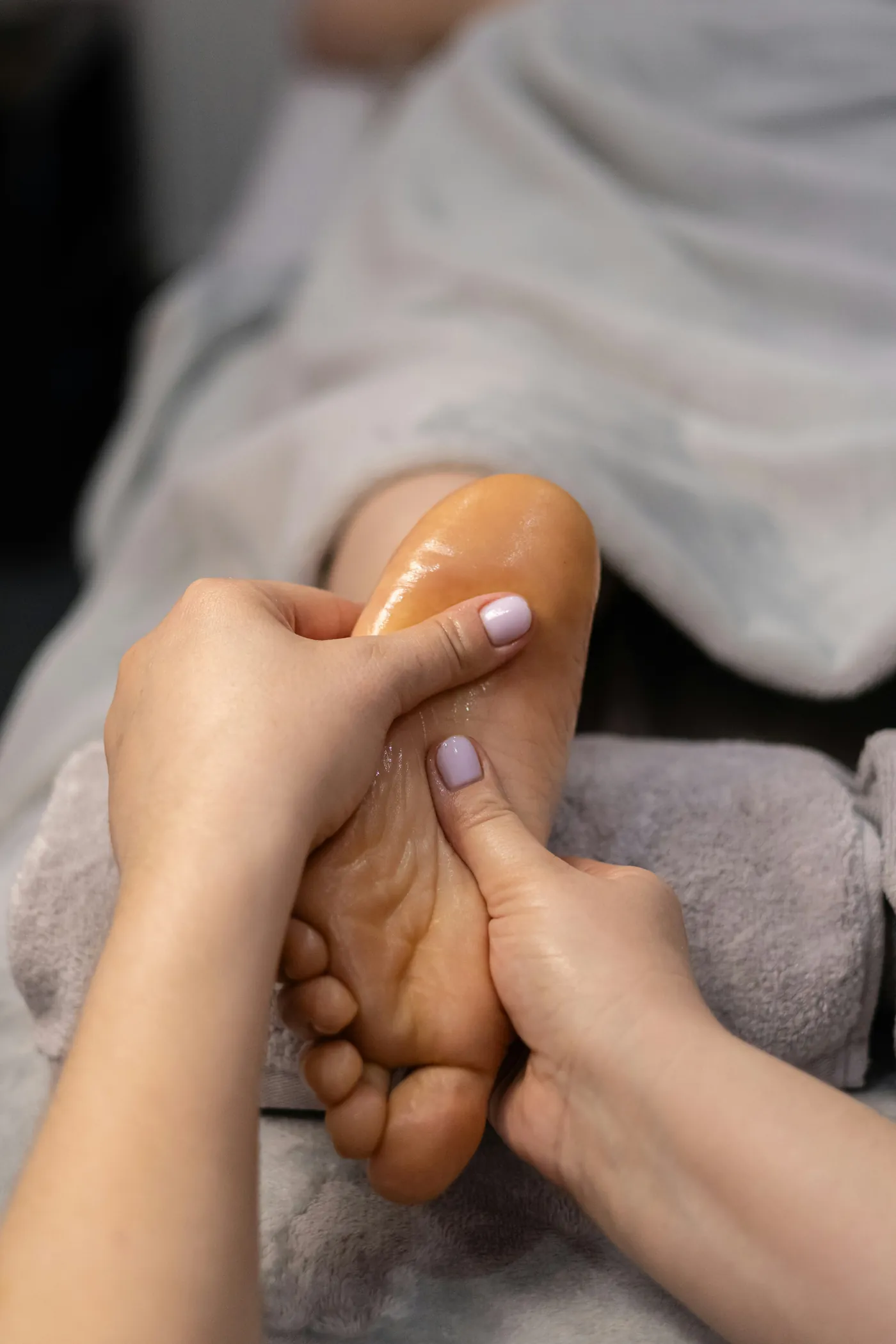
Reflexology works on a completely different system. Instead of muscles, I work on reflex points on the feet that correspond to organs and systems throughout the body. The technique is precise thumb and finger pressure on specific points, not broad strokes. I'm using your feet as a map to access the rest of you.
The goal is to encourage the body's own processes to function better: circulation, digestion, nervous system regulation, hormone balance. The treatment is only on your feet, but the effects can be felt throughout your whole body. That sounds strange until you've experienced it, and then it makes perfect sense.
If you want the full explanation of how this works, I've written about reflexology in detail here. But for now, the key thing to understand is that reflexology accesses your whole body through your feet, working towards internal balance rather than muscle release.
The Key Differences
Let me walk through how they differ in practice. With massage, the therapist works on your whole body or the areas you've asked them to focus on. Your upper and lower body are both treated. You undress and lie on a couch under a blanket, and they work through your muscles systematically. The technique is broad strokes and kneading movements that you can feel moving across your skin.
With reflexology, you stay fully clothed. You just take your shoes and socks off and sit or lie back in a comfortable chair. I work only on your feet, using my thumbs and fingers to apply pressure to specific points. The technique is quite precise. You might feel me working in one tiny spot that feels tender or "crunchy," and that corresponds to somewhere completely different in your body.
The clothing difference matters more than you'd think. With reflexology, you don't need to undress, which means there's no barrier to trying it if you're modest or prefer to stay clothed. You're already home and comfortable. With massage, you need to be comfortable undressing to some degree.
The goal is different too. Massage is about releasing muscle tension directly. You feel the benefit in the muscles that have been worked. Reflexology is about supporting the body's internal systems to work better. The benefit isn't in your feet. It's in your digestion, your sleep, your stress levels, your energy.
The training is different. A massage therapist studies anatomy, muscle groups, and massage techniques. A reflexologist studies the reflex map, how points correspond to body systems, and the techniques for working those points effectively. They're different skill sets, even though both require substantial training.
How it feels is different too. Massage feels like something is being done to your muscles. Reflexology feels more subtle, more internal. People sometimes describe it as something shifting inside them, or a release happening that's hard to put into words. It's more about what happens in you than what you feel being done to you.
After massage, you feel physically loosened. You might have that feeling of your shoulders being dropped, your back being released. After reflexology, the changes are more internal. You might sleep differently that night, your digestion might feel easier, your mood might be different. The effects unfold over the next hours and days.
Which One is Right for You?
This is practical. If you've got a specific muscle problem, massage might be the better choice. Tight shoulders from hunching over a keyboard at work. A sports injury. Chronic back pain. A massage therapist can target those areas and work the tension out directly. That's what massage does beautifully.
If you're dealing with stress, sleep issues, general tension, digestive discomfort, or you just feel off without knowing why, reflexology is worth trying. Many people have both. I have clients who see a massage therapist every month and come to me for reflexology in between, because they address different things. One releases their muscles, one resets their nervous system and digestion.
If you've never tried reflexology, it's easy to start because you don't need to undress and the treatment is just on your feet. Read about what to expect at your first reflexology session if you're curious about the experience.
Can You Have Both?
Absolutely. They complement each other well. Massage releases physical muscle tension, reflexology supports the body's internal systems. Some of my clients alternate between them depending on what they need that month. There's no conflict between them. I'd never discourage someone from having massage too.
Many people find they want both kinds of care. Different problems need different solutions. A holistic approach to your wellbeing often includes more than one type of therapy.
Common Questions
Is reflexology just a foot massage? No. The techniques, training, and goals are completely different. A foot massage works the muscles of the foot. Reflexology uses the foot to access the rest of the body through reflex points.
Do I need to undress for reflexology? No. You stay fully clothed. Just shoes and socks off. This is one of the reasons some people prefer it.
Which is more relaxing? Both are deeply relaxing. Reflexology tends to produce a different kind of relaxation: deeper, quieter, more internal. Many people fall asleep during a reflexology session. Massage is relaxing in a more physical, muscular way.
Is reflexology painful? It shouldn't be. Some reflex points might feel tender, especially if that area of your body is holding tension. But the pressure is always adjusted to your comfort. You tell me if something is too much and I adjust. I've written more about what to expect and how to communicate during a session here.
Both reflexology and massage have their place. Understanding which does what helps you choose what you actually need. Want to try reflexology? Look at available sessions and prices or get in touch to chat about what might help you.
If reflexology sounds like the right fit, you might like to know what a home visit actually involves, or how often people tend to book once they've tried it.